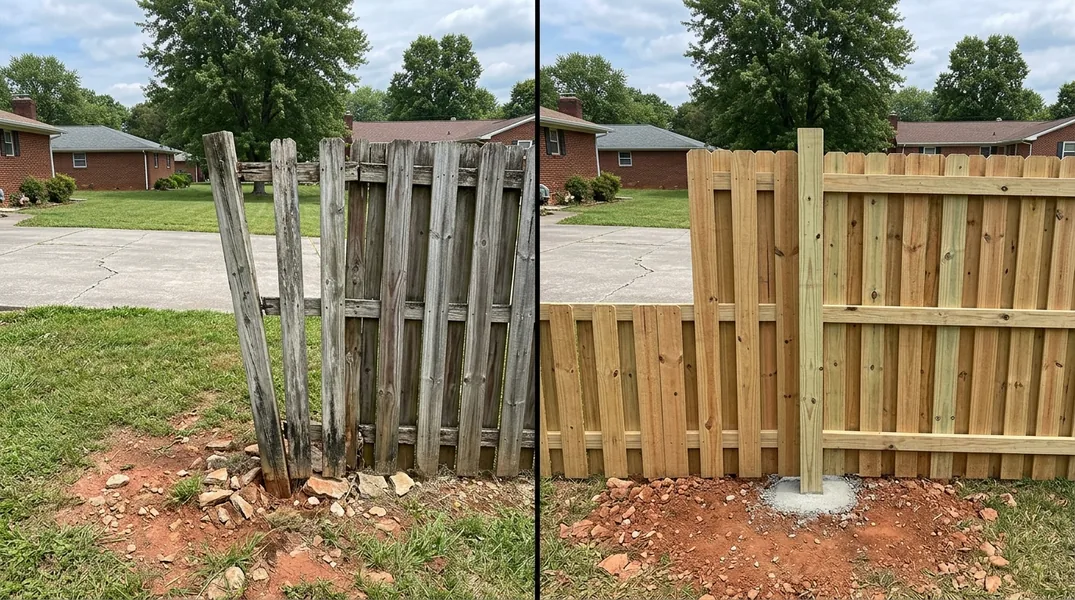
The Knoxville Fence Problem: Why Local Fences Lean
If you own a home in Knoxville, you've probably noticed something troubling in your backyard or your neighbor's yard: fences that lean at alarming angles. It's not a cosmetic issue, and it's not always due to poor installation. The reality is that Knoxville's unique soil composition and geological features create an environment where fences naturally struggle to stay upright over time.
The problem isn't just about old age or wear and tear. Homeowners across the region report fence failure within just five to ten years, even on relatively new installations. The culprit? A combination of shallow limestone bedrock, expansive red clay soils, and the inevitable decay of wooden fence posts. Understanding why this happens is the first step toward protecting your investment and knowing when to call for professional leaning fence repair services.
Shallow Limestone and Unstable Ground: The Geological Challenge
Beneath much of Knoxville's residential areas lies a layer of limestone bedrock that sits surprisingly close to the surface. This shallow limestone creates a hard, unyielding foundation that fence posts cannot penetrate deeply. When a fence post is installed, it typically needs to go 2 to 3 feet into the ground to achieve proper stability. In areas where limestone is shallow, contractors either hit rock before reaching adequate depth, or they must drill through the limestone itself, which is expensive and time-consuming.
The result is that many fence posts in the region are simply not anchored deep enough. This shallow anchoring means that any lateral pressure from wind, soil movement, or the weight of the fence itself can cause the post to shift. Over months and years, these small movements accumulate, and what started as a perfectly straight fence gradually tilts. The problem is compounded by the freeze-thaw cycles that occur during Knoxville winters, where ground moisture expands and contracts, further loosening already shallow post foundations.
Red Clay Expansion and Contraction: A Seasonal Threat to Fence Posts
East Tennessee's distinctive red clay soil is both a blessing and a curse for property owners. This clay is heavy, dense, and highly expansive when wet. During rainy seasons, the clay around fence posts absorbs moisture and swells, exerting lateral pressure on the posts. When dry seasons arrive, the same clay shrinks back, creating voids and gaps around the post base. This constant expansion and contraction cycles the post back and forth, gradually loosening its grip in the soil.
What makes this particularly damaging is that wooden posts are susceptible to this movement in ways that other materials aren't. The wood itself also absorbs and releases moisture, swelling and shrinking with the seasons. Combined with the red clay's behavior, this creates a double effect: the post moves within the soil, and the post itself is changing dimensions. Over several seasons, this repeated stress weakens the connection between the post and the surrounding soil, leading to the characteristic lean that homeowners see in their yards.
Rotted Posts and Hidden Decay: Why Wood Fails Faster in Knoxville
Even when fence posts are installed at proper depth and in stable soil, wood deterioration remains a major threat in the Knoxville climate. The region's humid subtropical climate, combined with frequent rainfall and warm temperatures, creates ideal conditions for wood rot. Fungi and decay organisms thrive in this environment, and wooden fence posts are particularly vulnerable because they sit at ground level, where moisture accumulates and drainage is poorest.
The decay typically starts at the base of the post, below ground where it's invisible to the homeowner. By the time you notice a lean or soft spot in the wood, significant structural damage may already have occurred. A post that has lost 30 to 50 percent of its structural integrity due to rot will fail suddenly under stress, often with just a strong wind or the weight of accumulated ice and snow. This is why Wood & Privacy Fence Installation in Knoxville requires either pressure-treated lumber rated for ground contact, concrete footings below the frost line, or regular maintenance and inspection.
Fence Post Repair and Replacement: Your Options for Leaning Fences
If your fence is already leaning, you have several options depending on the severity of the problem and the age of the fence. Minor leans, where the fence is still structurally sound but visibly tilted, can sometimes be corrected through careful adjustment and bracing. However, this is a temporary solution at best. The underlying cause, whether it's shallow installation or post decay, will continue to worsen.
The more reliable solution is fence post replacement. This involves removing the damaged or compromised post and installing a new one with proper depth and anchoring. In Knoxville, this often means going deeper than standard installation depth, sometimes adding concrete footings below the frost line to prevent heaving. If multiple posts are affected, replacing them all at once ensures uniform stability and appearance.
For homeowners considering a complete solution, removing and replacing all posts at once, combined with addressing the underlying soil issues, can extend the life of your fence significantly. Some contractors recommend installing posts with concrete collars that extend several inches above grade, which helps prevent water from pooling around the base and accelerating rot. Getting a free estimate from a local professional is the best way to understand what your specific fence needs.
Preventing Future Fence Leaning: Maintenance and Professional Installation
The best defense against leaning fences is prevention. Proper installation from the start makes an enormous difference. Posts should be set at least 30 inches deep, and in Knoxville, 36 to 42 inches is often recommended. Concrete footings should extend below the frost line, which in this region is typically 12 to 18 inches below grade. This means the post and concrete should penetrate 48 to 60 inches total. While this costs more upfront, it prevents the expensive repairs and replacements that come later.
Regular maintenance also extends fence life significantly. Inspect your fence annually, especially after heavy rains or winter weather. Look for soft spots in the wood, visible leans, or posts that move when you push on them. Seal or stain wooden fences every two to three years to protect against moisture penetration. Clear away soil and debris from the base of posts to improve drainage and reduce moisture accumulation. If you notice early signs of leaning or decay, address them immediately rather than waiting for catastrophic failure.
If you're planning a new fence installation or need to repair an existing one, working with a contractor familiar with Knoxville's unique soil and climate challenges is essential. Knoxville Fence Company has years of experience installing and repairing fences in this region and understands exactly what it takes to build a fence that stays straight and strong. Whether you need Wood & Privacy Fence Installation or emergency post replacement, we're here to help. Call us today at (865) 564-6298 to discuss your fence concerns.
Looking for a professional tree service in Knoxville? Knoxville Fence Company responds fast for all your fence needs.
Get a Free Quote